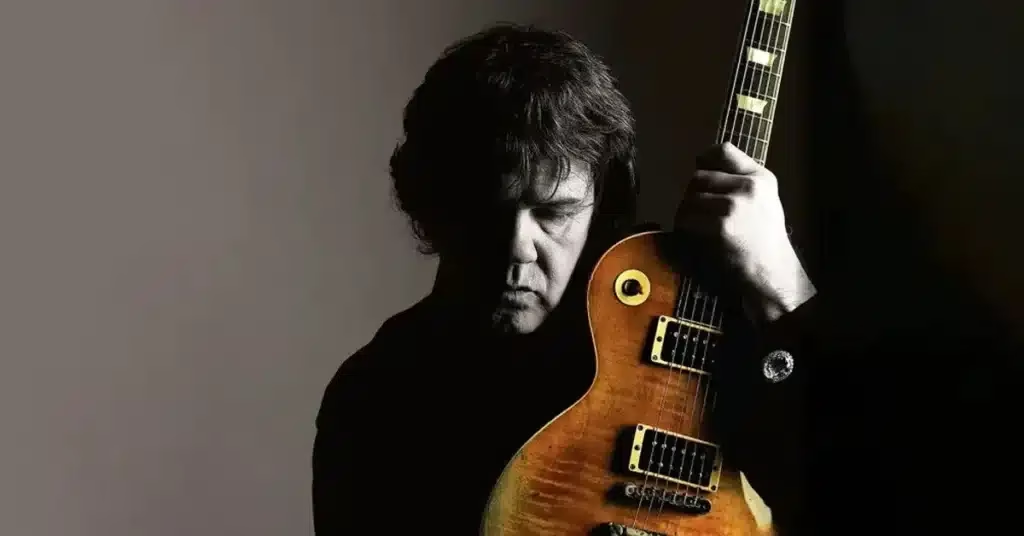
Gary Moore: The Soulful Virtuoso of Blues and Rock
Gary Moore. Early Life and Musical Roots
Full Name: Robert William Gary Moore
Born: April 4, 1952 – Belfast, Northern Ireland
Died: February 6, 2011 – Estepona, Spain
Gary Moore grew up in Belfast, immersed in the music of Elvis Presley, The Shadows, and . Inspired by bluesmen like Albert King and Peter Green, he began playing guitar at age 8 and was performing professionally by 14. Despite being left-handed, he played right-handed, adding to his unorthodox style.
Gary Moore. Early Career: Skid Row and Thin Lizzy
In the late 1960s, Moore joined the Irish blues-rock band Skid Row, which briefly featured Phil Lynott on vocals. This partnership would evolve into a lifelong musical relationship.
✦ Thin Lizzy
Moore had three stints with, most notably in 1974 and again in 1979 for the album Black Rose: A Rock Legend, which featured the standout track “Róisín Dubh (Black Rose): A Rock Legend.”
His searing lead guitar and Celtic flair complemented Lynott’s poetic songwriting. Though Moore was never a permanent member, his collaborations with Thin Lizzy were essential to their legacy.
Gary Moore. Solo Hard Rock Era (Late 1970s–1980s)
Gary Moore’s solo career blossomed in the late ’70s with a focus on hard rock and guitar virtuosity, especially in the wake of Van Halen’s rise and the guitar-hero boom.
✦ Corridors of Power (1982)
- Moore emerged as a melodic hard rock soloist
- Songs like “End of the World” and “Always Gonna Love You” showcased his emotional depth
✦ Victims of the Future (1984)
- Blended hard rock with political themes (e.g., “Murder in the Skies”)
✦ Wild Frontier (1987)
- Paid tribute to Phil Lynott, who died in 1986
- Infused with Celtic rock energy
- Hits: “Over the Hills and Far Away,” “Wild Frontier”
Though he was successful in the hard rock and metal scenes, Moore always carried the soul of a bluesman, which he would soon embrace more directly.
Gary Moore. Blues Reinvention and Worldwide Recognition (1990–1997)

✦ Still Got the Blues (1990)
- A career-defining album that marked Moore’s return to his blues roots
- Featured Albert King, Albert Collins, and George Harrison
- Title track “Still Got the Blues” became his signature song — a slow, emotional solo that rivals any in rock history
✦ After Hours (1992)
- Continued the blues momentum with tracks like “Cold Day in Hell” and “Story of the Blues”
- Balanced classic blues stylings with Moore’s rock background
✦ Blues for Greeny (1995)
- A heartfelt tribute to Peter Green, Moore’s idol and mentor
- Played using Green’s legendary 1959 Les Paul guitar
This blues phase brought Moore international acclaim, especially in Europe and Japan, where his emotional expressiveness and tone-driven style were revered.
Gary Moore. Later Years and Musical Exploration (1999–2011)
In the 2000s, Moore continued exploring different styles while returning occasionally to rock and blues.
✦ Back to the Blues (2001), Power of the Blues (2004)
- Rawer and more stripped-down
- Songs like “You Upset Me Baby” and “That’s Why I Play the Blues” captured his late-career groove
✦ Scars (2002)
- A return to rock-blues power trios, with a heavier sound
- Showed influence from grunge and modern blues-rock
✦ Bad for You Baby (2008)
- His final studio album before his untimely death
- Showed Moore still playing with fire, soul, and clarity
He died of a heart attack in 2011 while on vacation in Spain, shocking the rock and blues world.
Playing Style and Gear
Gary Moore was known for:
- Searing vibrato and expressive bends
- Long, emotionally charged solos
- Use of Les Paul guitars, especially Peter Green’s
- Blending British blues, Celtic melody, and American soul
He could shred with intensity or whisper with heartbreak, often within the same song.
Legacy and Influence
Gary Moore is remembered as:
- A guitarist’s guitarist — respected by Eric Clapton, Joe Bonamassa, Joe Satriani, Zakk Wylde, and more
- A key figure in the revival of blues in the 1990s
- A bridge between and blues, equally at home in both realms
His ballads (“Still Got the Blues,” “Parisienne Walkways,” “Empty Rooms”) remain cornerstones of emotional guitar work.
Tributes and recognition:
- Multiple posthumous compilations and live releases
- “One of the finest blues guitarists ever to emerge from the British Isles” – Guitar World
Interesting Facts
- “Parisienne Walkways” (1979) was co-written with Phil Lynott and became one of his biggest UK hits
- His early influences included jazz fusion, showcased on G-Force (1980)
- Moore never relied on flash — he was focused on tone, feel, and phrasing
- Fans include B.B. King, who once said Moore was “among the best blues players in the world”